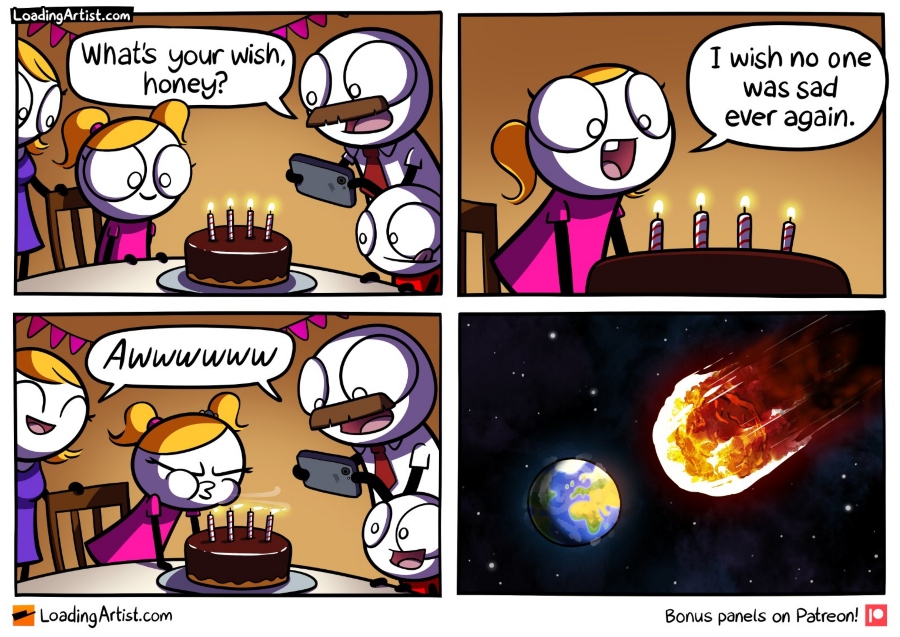
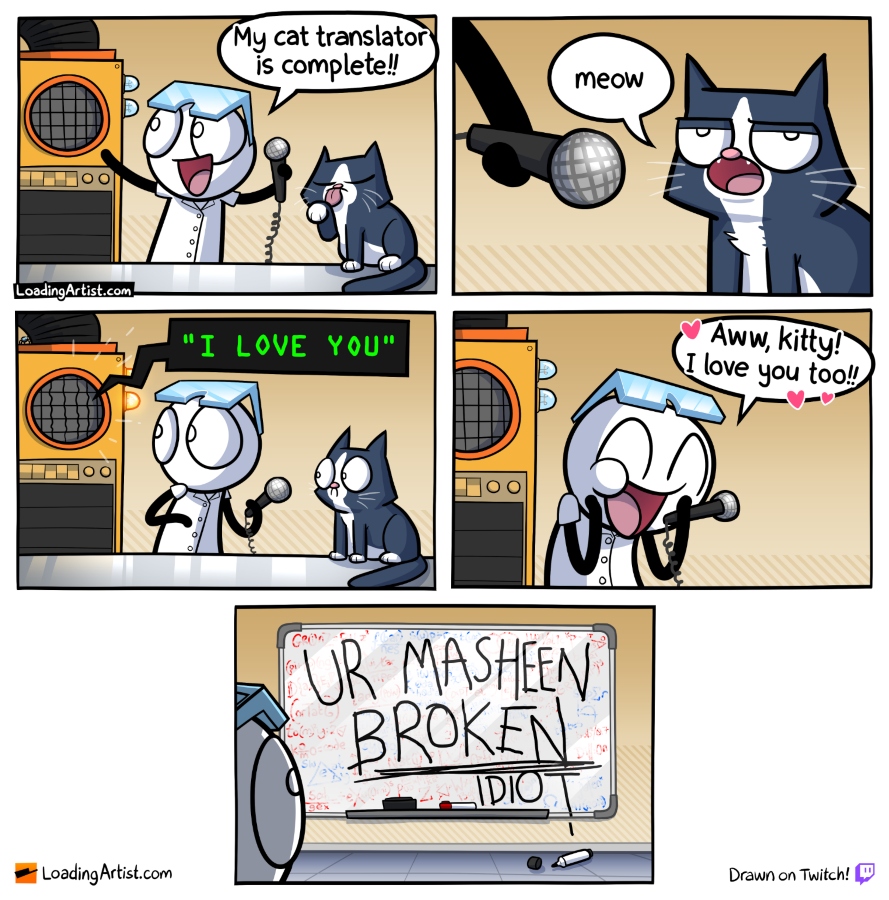
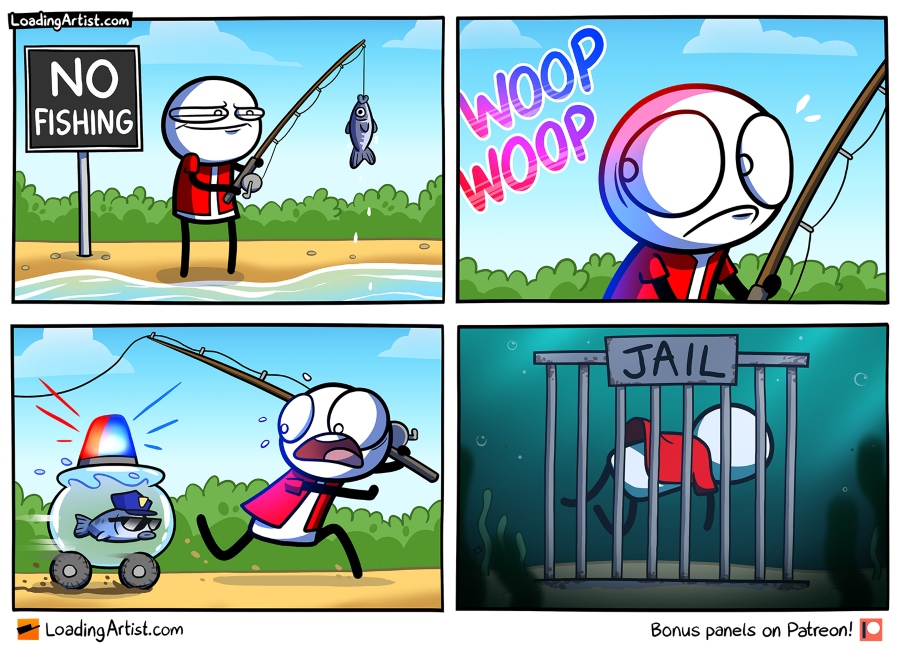
Are you looking for a good laugh and a dose of dark humor? Look no further than the webcomics of “Loading Artist.” These twisted and hilarious comics have been stirring the internet with their unique brand of wit and sarcasm. From social commentary to relatable everyday situations, “Loading Artist” makes the mundane feel fresh and exciting.
We have gathered his best comics so we can dive together into the world of “Loading Artist” and explore some of the most popular and talked-about webcomics. So sit back, relax, and get ready to laugh.
This article was originally published on worldtravelling.com and has been republished here with permission.
The way to success
Gregor is a comic artist who was born on June 24th, 1989, in Auckland, New Zealand. He worked as a UI Artist for Gameloft New Zealand and left the studio before it was shut down.

He started Loading Artist in early 2011, and due to its success, and the miracle of Patreon, he quit his job to work on it full-time. Today he has over 500k followers on his Instagram profile and is also very successful on the Twitch platform.
Sophisticated drawings
When asked when he began drawing and what inspired him to start creating comics, he replied that it was as far back as he could recall. Ever since he could grab a pen, he would draw doodles, and they evolved into more sophisticated drawings.

As for his early contact with comics and cartoons, he read The Far Side, Calvin & Hobbes, and had a complete infatuation with Garfield. All of this got him into comics. From then on, it was history.
Other sources to learn drawing
We asked Gregor if he was entirely self-taught or if he had any formal art training. He was very honest and replied that he lacked the necessary training for drawing. However, he specialized in 3D as he was pursuing a career in 3D game artistry.
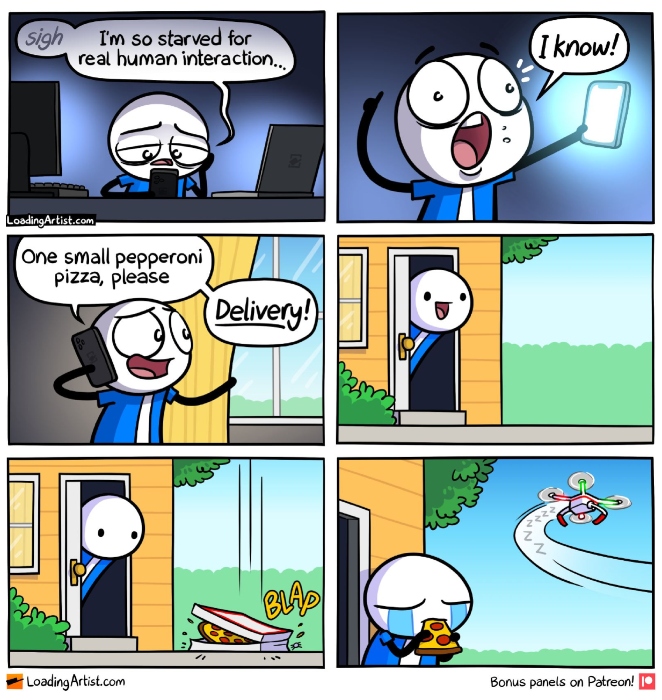
He said, “While attending an art school is undoubtedly preferable to self-teaching, it is not the only option. No way, not with the Internet and all the available free tutorials.” He found other sources to learn drawing.
An artist in progress
Gregor wanted to be a better artist so he came up with a plan. He thought he would stick with it better if he had the pressure of people watching his progress. He said, “So I decided to create an art blog where I would post my updates. I called it ‘Loading Artist’ because I’m an artist in progress.”
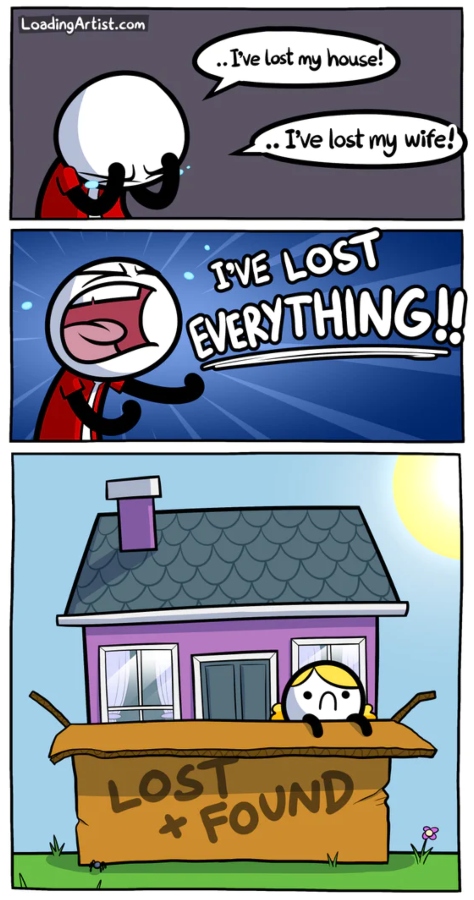
However, not too long after creating the website, he had the idea to create a comic book and practice his drawing inside of it.
Coming up with ideas
The hardest thing for Gregor is to think of comedic concepts. He appears to work well under pressure and comes up with ideas near their due date. “I’ll make an effort to sit down and brainstorm for at least a few days beforehand, but it rarely happens until the penultimate night when something finally puts me out of my agony,” he shares.
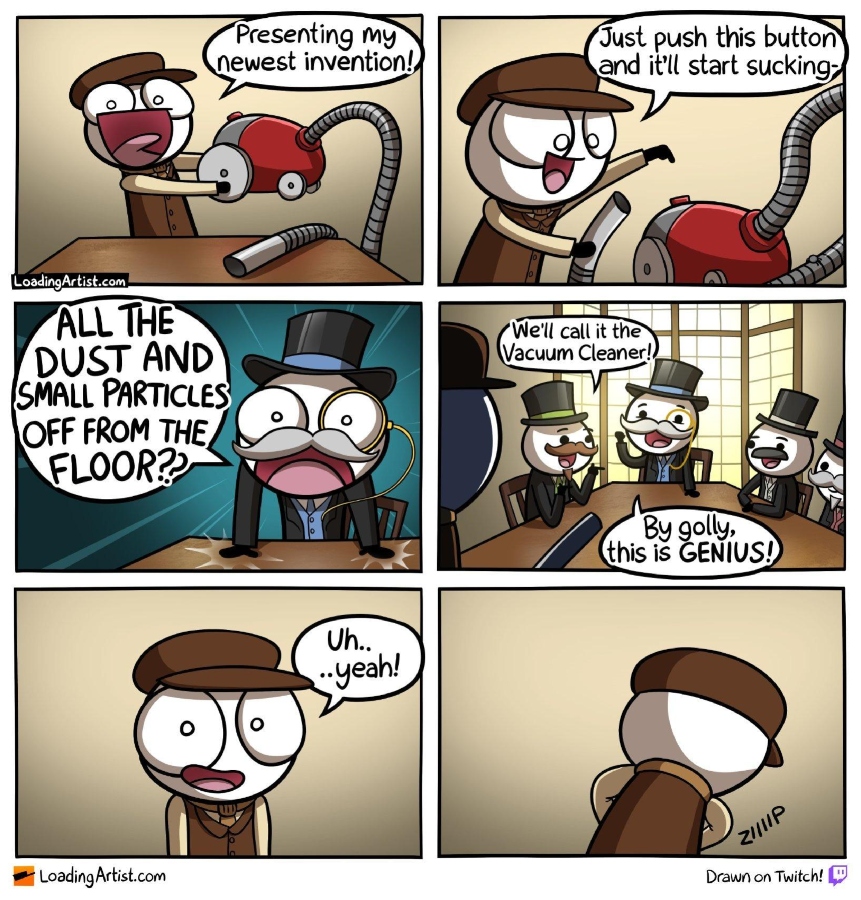
He typically pounds it out during brainstorming sessions when sitting down at a cafe with a coffee and sketchbook. He always keeps his phone close at hand in case something sparks an idea for a fast digital note.
Changing workflows
There have been some big changes in his workflow comparing the very first Loading Artist comic to the most recent work. The biggest change would be moving from Adobe Photoshop to Clip Studio Paint. “I am in love with my current workflow and drawing the line art is a breeze in comparison with all my new hotkeys and techniques.”
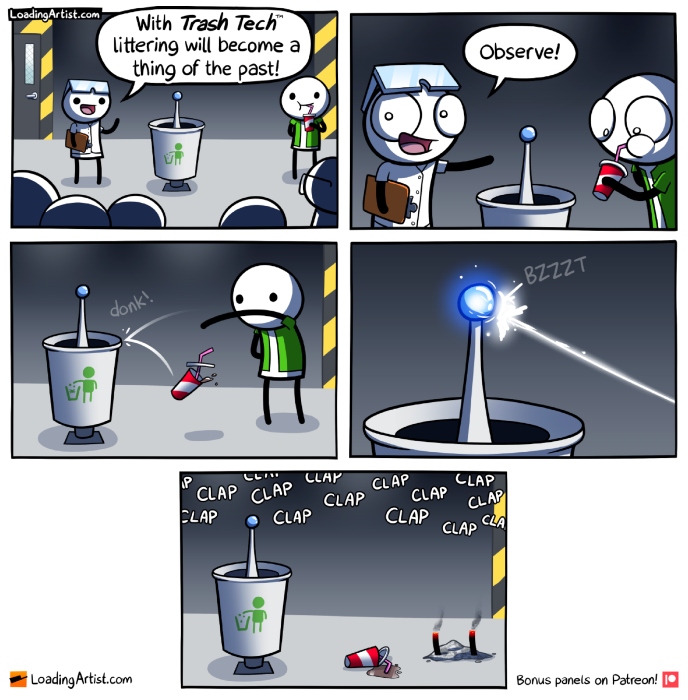
The biggest game-changer for him has been using vector layers for the lines because it gives him the freedom to easily edit a line and even fast erase the parts he doesn’t want.
Loyal fan base
Early in March 2014, Gregor joined Patreon, and it has been a good experience so far for him. He considers himself extremely fortunate to have such a loyal fan base. Patreon lets people financially support and reward content creators — such as podcasters, writers, and YouTubers — through a monthly subscription.

Regarding ideas for how to make better use of Patreon, he thinks you should keep the prizes fair in terms of how long they will take you to do them, as they might add up quickly and compromise your primary work.
Twitch
When asked if he practiced other artwork outside comics, Gregor said: “The only other artwork I produce, aside from my comics, is for my Twitch stream, whether it’s an animated overlay, emotes, or gaming wallpapers for the games we play. I don’t do much drawing besides comics.”
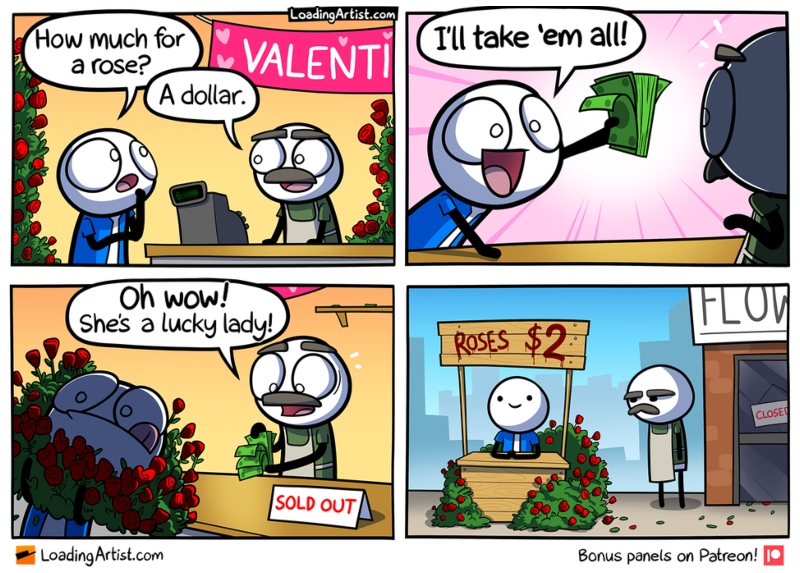
Twitch is a video-streaming platform that offers a fun, social way to watch people play games. Through the Twitch app, gamers who broadcast their matches (known as streamers) play their favorite titles while providing running commentary on the action.
His favorite comics
Gregor’s favorite comics are also webcomics. Extraordinary Comics, which is drawn nicely and has a surreal/wholesome element, is one of his favorite webcomics, written by his real-life best friend. In addition to Safely Endangered, which is funny and has a very pleasing style.
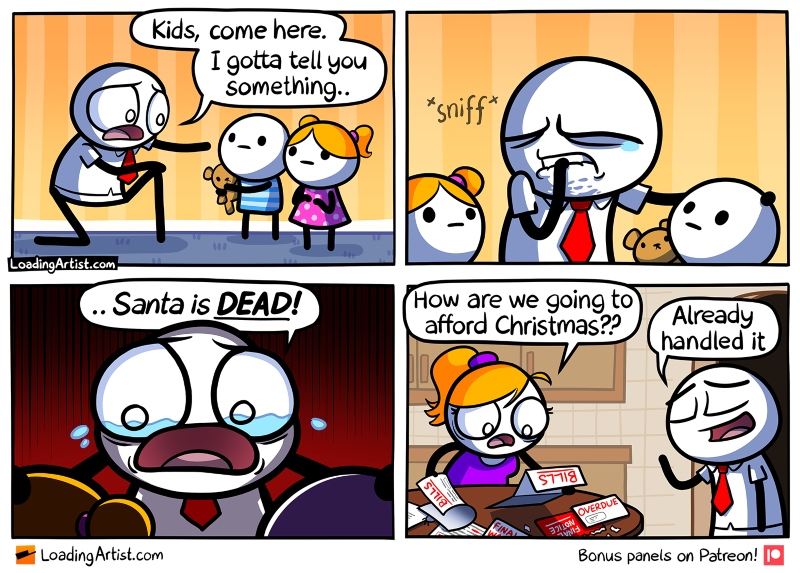
“For me, a good comic is one that is concise and uses few words. I also enjoy comics that feature more than just two people gazing at each other while keeping their lips open.”
Advice for new comic artists
When asked to share any final advice for aspiring comic artists, Gregor simply said “Just start.” He frequently receives inquiries about how to develop a “style” or how to get ready when considering creating a comic, etc.

The best advice is to just get started. Your initial work will undoubtedly be terrible, but that is to be expected. Just continue to create. Don’t hold on to your earlier work. Recognize your growth and learning. Practice makes perfect, just keep doing what you do.
Impacted the webcomic community
“Loading Artist” has significantly impacted the webcomic community and its fans. The comic, first published in 2010, has become one of the most popular and well-known webcomics on the internet, attracting a dedicated following of fans eagerly awaiting each new installment.
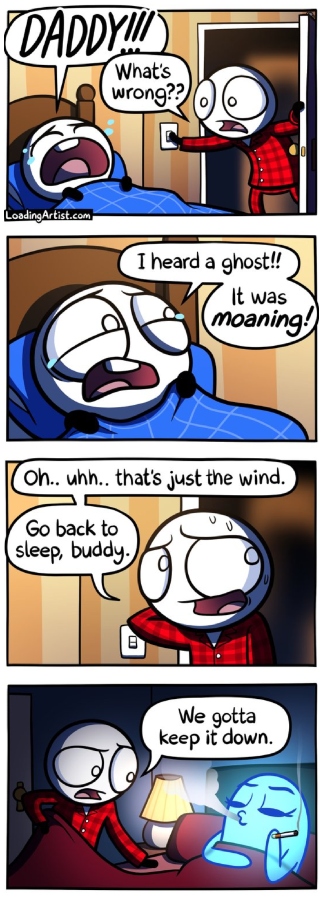
Now, we will examine the ways in which “Loading Artist” has impacted the webcomic community and its fans and why it continues to be so popular after all these years.
Unique and distinctive style
One of the key ways “Loading Artist” has impacted the webcomic community is through its unique and distinctive style. The comic is known for its minimalist artwork and use of irony and sarcasm, which set it apart from other webcomics and make it immediately recognizable to fans.

This style has been hugely influential, inspiring other creators to experiment with similar techniques and helping to establish a new aesthetic for webcomics.
Representation of the creative process
Another way “Loading Artist” has impacted the webcomic community is through its representation of the creative process. The comic often features strips that explore the challenges of being an artist and the difficulties of developing new ideas.
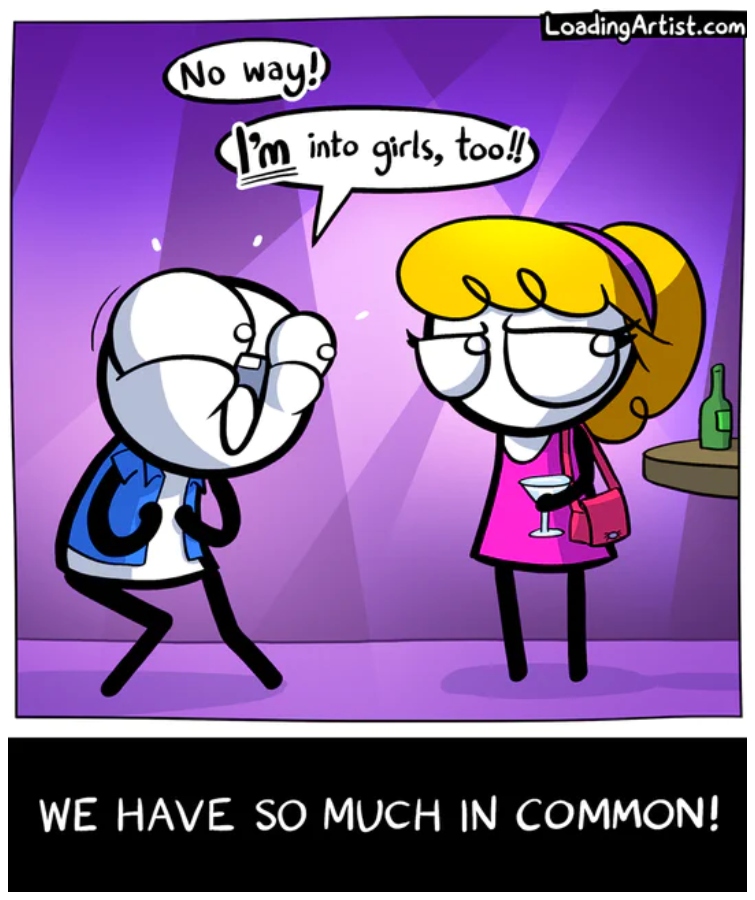
This has resonated with many creators in the webcomic community, who can relate to the struggles depicted in the comic and find comfort in the humor and self-deprecation that Czaykowski brings to the subject.
A sense of community among its followers
“Loading Artist” has also had a significant impact on its fans. The comic has created a sense of community among its followers, who regularly discuss and debate the latest strips and the themes they explore.
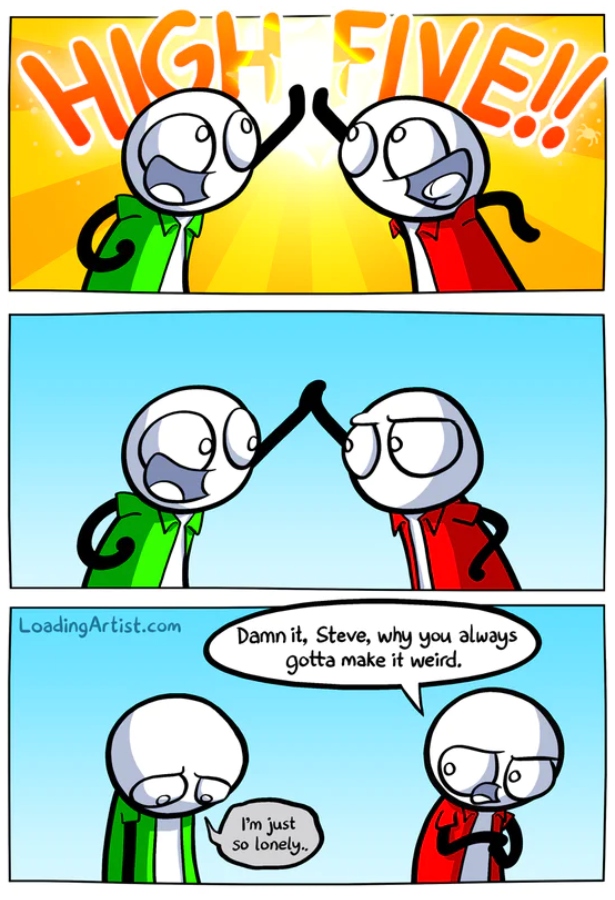
This sense of community has been strengthened by the fact that Czaykowski is highly active on social media and regularly interacts with his fans, responding to comments and questions and sharing behind-the-scenes glimpses into his creative process.
How people think about and engage with comedy
In addition to impacting the webcomic community and its fans, “Loading Artist” has helped shape popular culture more broadly. The comic’s use of irony and sarcasm has been widely imitated, with many other comedians and artists adopting similar techniques in their own work.
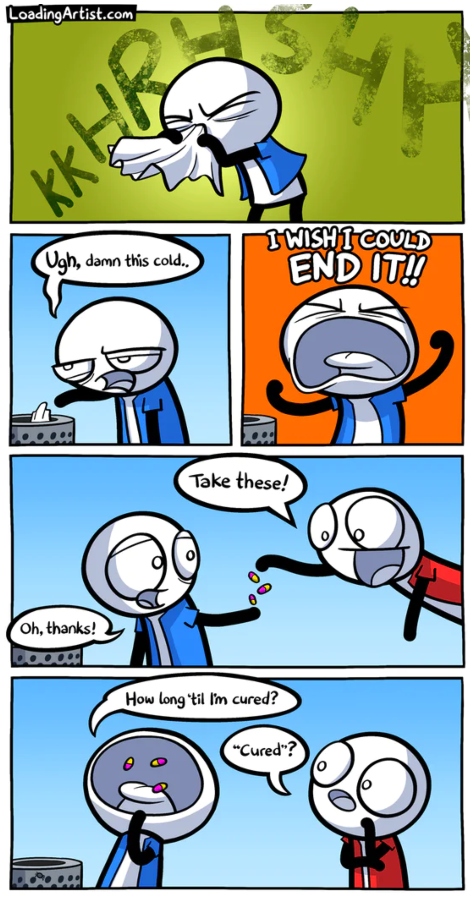
This has helped establish sarcasm and irony as essential elements of contemporary humor and has impacted how people think about and engage with comedy.
Experimenting with new forms of storytelling
Another reason “Loading Artist” continues to be so popular is how Czaykowski continues to evolve and grow as a creator. Over the years, he has refined his style and techniques, experimenting with new forms of storytelling and pushing the boundaries of what is possible in a webcomic.
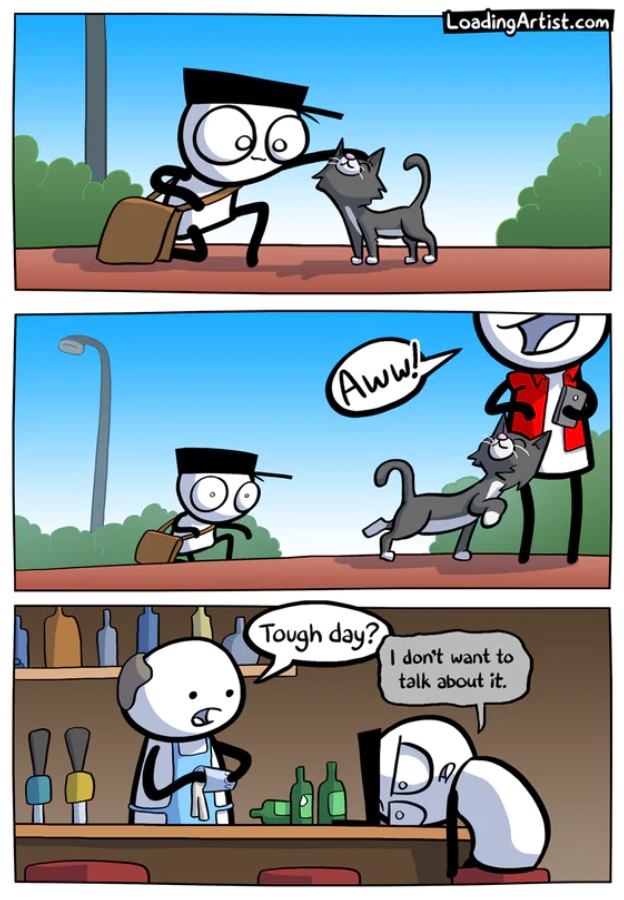
This has kept the comic fresh and relevant and helped ensure that it continues attracting new fans and retaining its dedicated following.
The Humorous Essence of Everyday Life
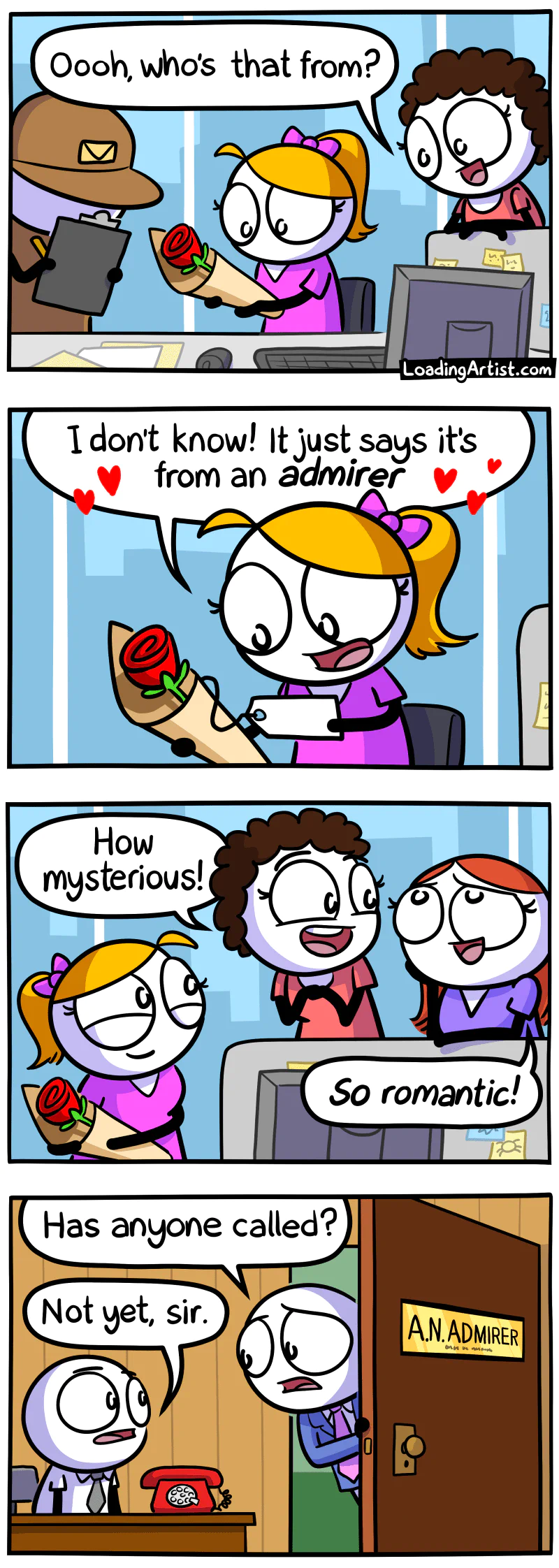
Loading Artist Comics brilliantly captures the humor in everyday situations. Gregor Czaykowski, the mastermind behind these comics, has a unique way of turning mundane scenarios into laugh-out-loud moments.
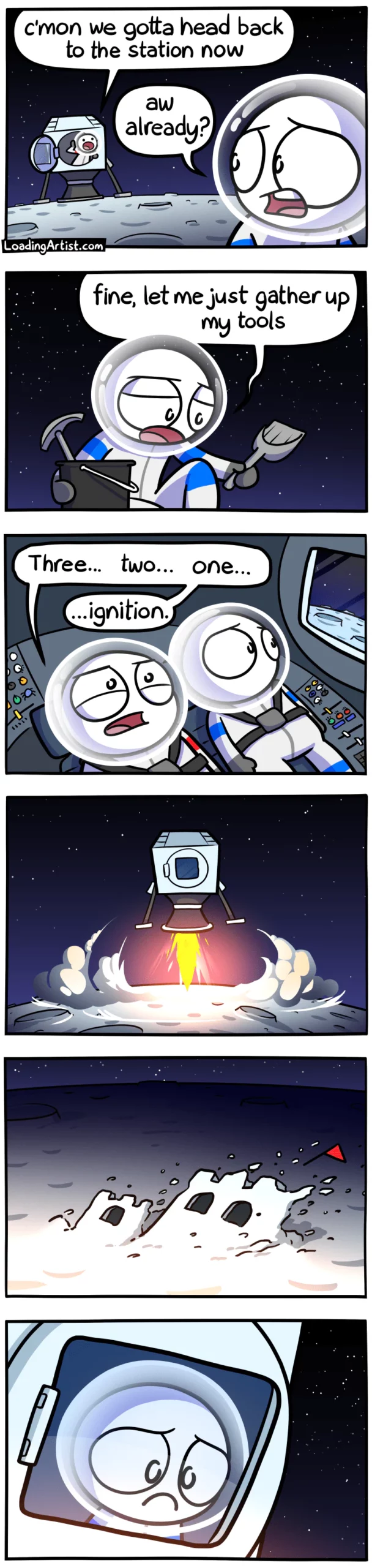
From dealing with social awkwardness to the challenges of modern technology, Gregor’s comics resonate with a wide audience. His use of simple yet expressive illustrations adds charm, making the comics both relatable and visually captivating.
The Impact of Loading Artist’s Dark Humor
Loading Artist Comics often ventures into dark humor, taking a seemingly grim situation and turning it into something laughable. Gregor Czaykowski has a knack for finding comedy in unexpected places, and it’s this element of surprise that has become a hallmark of his work.
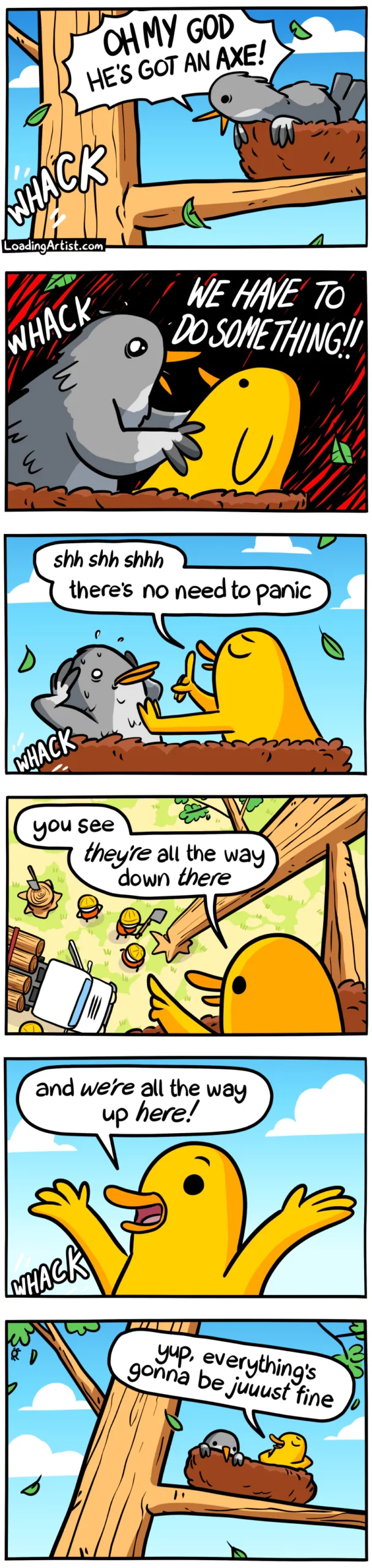
This edgy style of humor can be both thought-provoking and hilarious, striking a chord with readers who appreciate a more unconventional approach to comedy. It challenges traditional comic norms and adds a layer of complexity that sets Loading Artist apart from many other webcomics.
Themes of Existential Crisis
Many Loading Artist Comics touch on existential themes, taking readers on a philosophical journey. Gregor uses humor to explore the human condition, making profound statements through his comics.
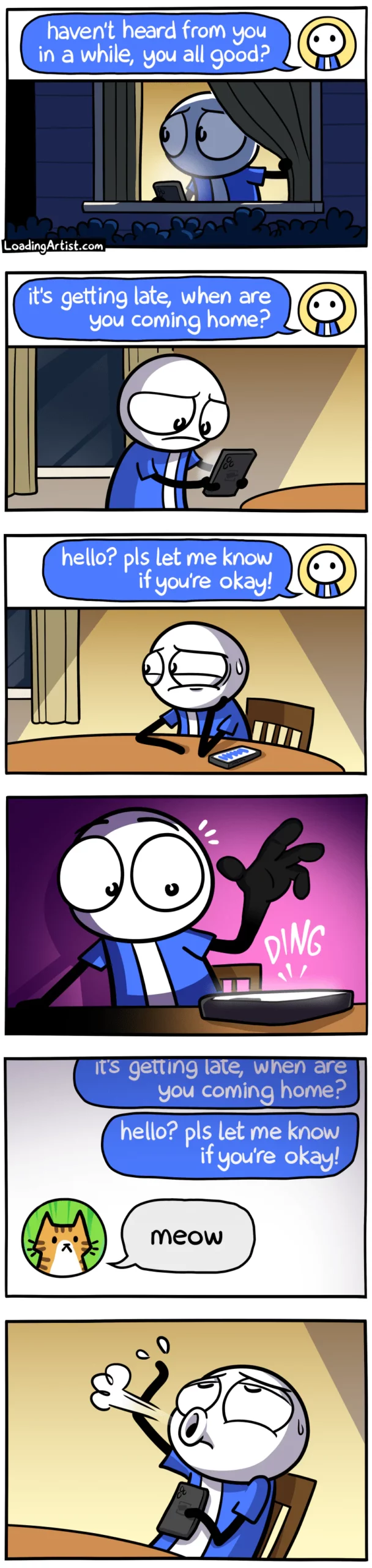
These comics often spark deeper reflection, all while making readers laugh. They offer a perfect balance between entertainment and introspection, marking them as timeless pieces of art.
Community Engagement through Twitch
Gregor Czaykowski’s connection with his audience is not limited to his comics. He regularly streams on Twitch, allowing fans to watch him work on his latest pieces.
These streaming sessions not only allow fans to get a glimpse of his creative process but also foster a sense of community. It’s a place where fans can interact directly with Gregor and share their thoughts on his work.
The Evolution of Loading Artist
Since its inception in 2011, Loading Artist has evolved immensely. What began as a simple webcomic has grown into a brand, with merchandise, Patreon support, and a strong online community.
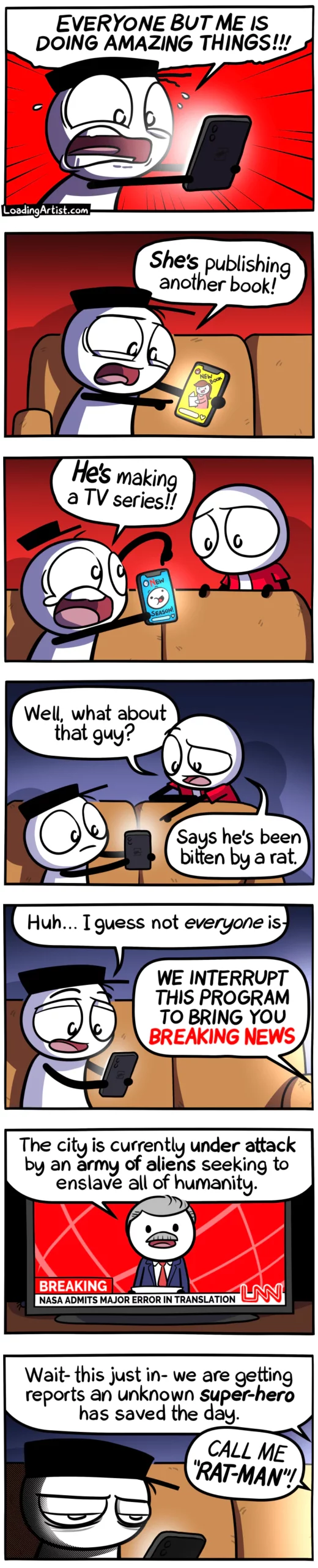
Gregor’s relentless dedication to his craft and his willingness to adapt to changing times have made Loading Artist a lasting success. The comics continue to engage audiences, reflecting maturity and refinement in both style and content.
Humor that Transcends Boundaries
Loading Artist’s appeal is global, thanks to the universal nature of its humor. Gregor Czaykowski taps into shared human experiences, transcending cultural boundaries.
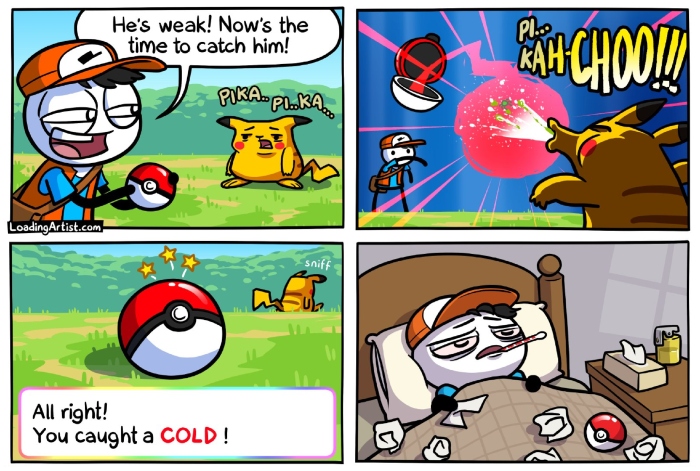
Whether you’re from North America, Europe, or Asia, there’s something in Loading Artist that will resonate with you. This universal appeal has helped build a diverse and loyal fan base around the world.
Gregor’s Personal Touch in Every Comic
Gregor Czaykowski’s personality shines through in his work. His unique perspective and quirky sense of humor make Loading Artist Comics a personal expression of his thoughts and feelings.
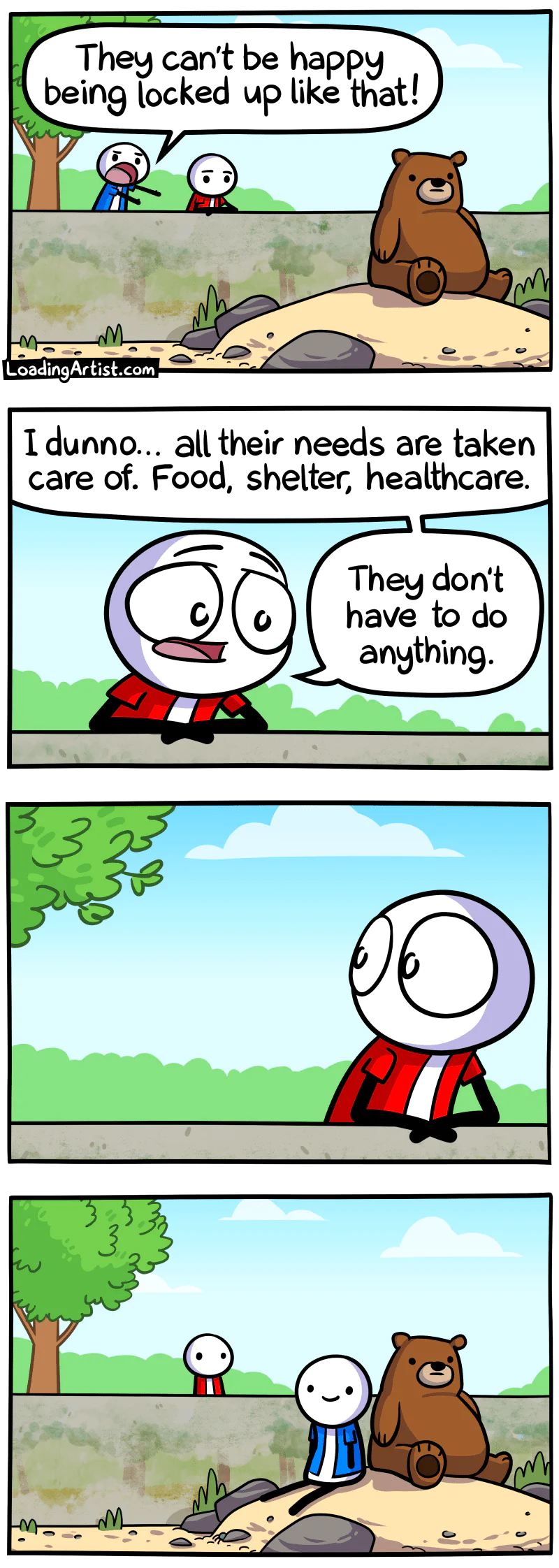
Fans appreciate the authenticity of his work. Each comic feels like a personal conversation with Gregor, fostering a deeper connection with readers.
The Influence of Social Media
Social media has played a significant role in the success of Loading Artists. Gregor Czaykowski’s active presence on platforms like Twitter and Reddit has helped him reach a broader audience.

Through social media, he shares his latest work and engages with fans, fostering a thriving community around his comics.
A Source of Inspiration for Aspiring Artists
Gregor Czaykowski’s success story with Loading Artist is an inspiration to many aspiring comic artists. His journey from a simple webcomic to a beloved brand offers valuable lessons.

Gregor’s dedication, creativity, and willingness to engage with his community are aspects that emerging artists can learn from. His story is proof that with the right approach, webcomics can reach great heights.
Diverse Content with a Consistent Voice
Loading Artist Comics covers a wide range of topics, from love and loneliness to work and friendships. Despite this diversity, Gregor Czaykowski maintains a consistent voice and style.

This consistency is key to the comics’ success, ensuring that each new piece feels familiar yet fresh. It keeps readers engaged and invested in the world that Gregor has created, making Loading Artist Comics an evergreen favorite.
Gameloft
Gregor worked as an UI artist at Gameloft in New Zealand He has worked as the lead user interface artist on a few games, including the recent “Ice Age Adventures” and “My Little Pony.” It entails setting the interface’s style, creating the menus in Photoshop and Flash, sharing ideas with the designers, and attempting to maintain good relations with the programmers.

A user interface (UI) artist works primarily in the video game industry. As a UI artist, your responsibilities entail the implementation and optimization of user-friendly graphics, icons, and buttons to help players understand complex games or game features.
Dual artistic existence
Gregor is between 2 career paths. He has two careers: one as a UI artist in the video game industry, and the other as a comic book creator. He has been alternating between the two.
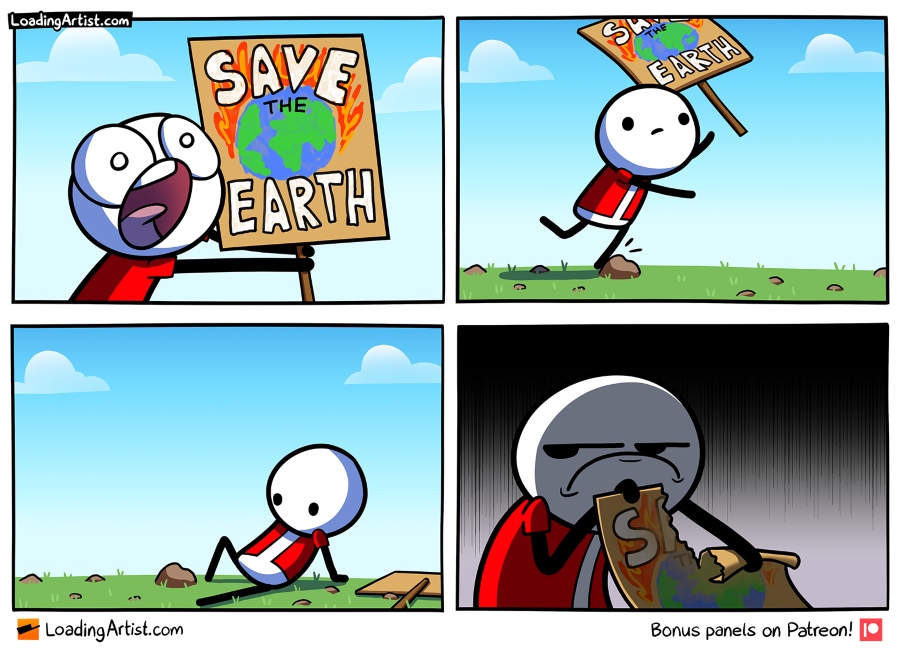
He originally intended to work in the games industry as a 3D artist (or a 2D concept artist), but while pursuing his Game Development Graduate Diploma at Media Design School, he discovered he had a passion for creating a game’s user interface. This is how he ended up in Gameloft.
Post frequency
Gregor started the webcomic Loading Artist at the beginning of 2011. He had no idea where he wanted to go with it; all his instinct told him was that he needed to act quickly. He was actually experiencing a minor quarter-life crisis.
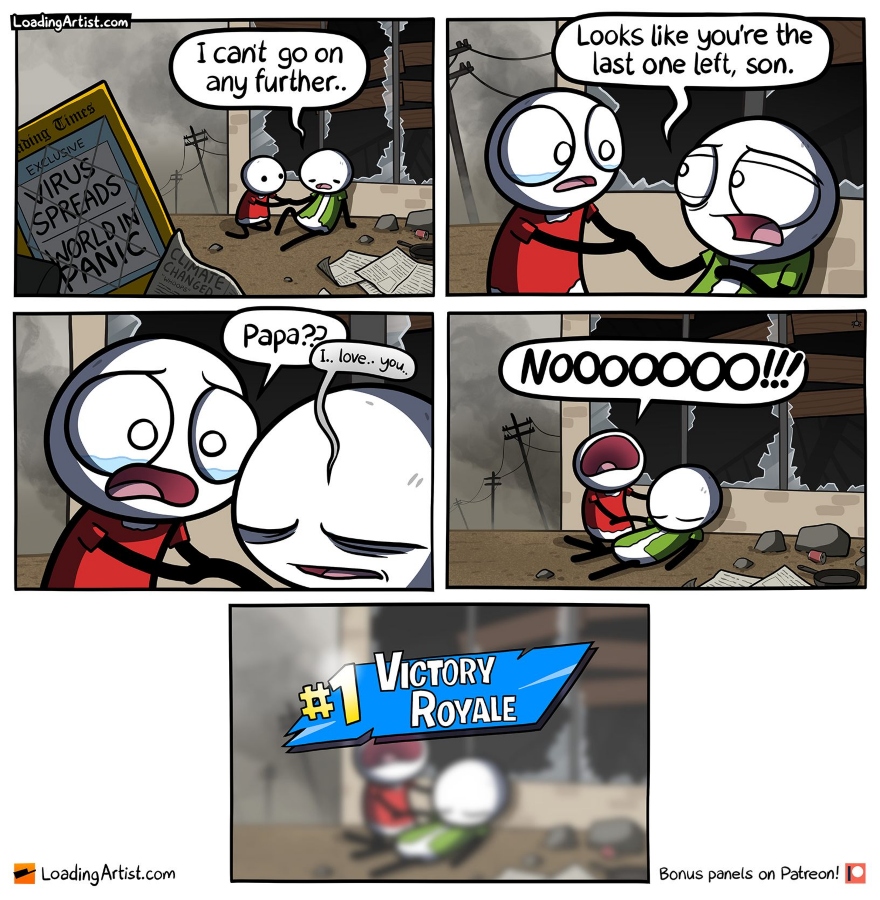
Loading Artist is about an artist who wants to become rich and famous. He is very grateful considering he posts anywhere from “once a week” to “once in a blue moon.” Nevertheless, his fans never miss a post.
Gregor admires Cyanide & Happiness
Going into deep conversation, when asked what inspired him the most, Gregor said “The occasional realization of how extremely limited our time on Earth is.” This gives him the push to keep creating no matter what to leave a mark behind.
When asked what webcomic or artwork he would have liked to create himself, he replied ‘Cyanide & Happiness’, which is a popular webcomic. In 2009, a journalist for The Telegraph named the comic as one of the top ten webcomics, and by 2012, the website was getting over a million visitors each day.
He takes pride in the work he did at Gameloft
Gregor takes pride in the work he accomplished at his job at Gameloft. Aside from his work in Loading Artist, he is pleased with everything he did at Gameloft.
Even though the iOS apps for “My Little Pony” and “Ice Age Adventures” are not exactly the kinds of games he would have wanted to create, he was proud of what his team and himself were able to accomplish, given the challenges they faced. Creating apps is not easy, and it requires a lot of knowledge and teamwork.
Good and bad advice
When asked what the best advice he received was, Gregor said that he never received it; however, he occasionally thinks back on an Akimbo comic (#202) because it helps him put things into perspective and reevaluate his priorities in life.
The worst piece of advice he received was to visit Reddit. “I’ve spent a lot of time online wasting time. It’s a habit I’m working on getting rid of.” Like addictive behaviors, excessive internet use has been shown to release dopamine in the brain.
Recurring characters
The comics that don’t feature the recurring characters, are actually comics created by the main recurring protagonist. The primary and recurring character is an artist who creates the comics and aspires to become a better artist (thus Loading Artist as he is still in the process of loading).

Recurring characters (no official names yet): The Guy with the Hat aka Hat Guy aka Loading Artist aka Gregor, The Girl aka The Girlfriend aka Jes, The Friend, The Cat aka Cat, The Bird, The Grim Reaper aka Grim aka Death, The Boss aka Game work Boss, and The Colleague aka Game work Employee.
Gameloft lay off
As many as 160 employees have lost their employment as a result of Gameloft, the biggest game company in New Zealand, closing another studio. Seven studios were shut down by the French mobile company in 2015 alone as part of what CEO Michel Guillemot called “an ambitious cost reduction initiative.”

The New Zealand closure, which would result in the loss of 160 jobs, maybe the most “ambitious” of all. This is when Gregor was laid off but fortunately he decided to dedicate his full time to webcomics.
The project that got shut down
Gameloft opened an office in Auckland in 2009, and the company has grown beyond all expectations. “When Gameloft first opened in Auckland six years ago, we anticipated that they would expand to a workforce of maybe 50 or 60 people. Their expansion to over 150 individuals demonstrates how well the team worked together,” said Stephen Knightley, chair of the New Zealand Game Developers Association.
However, Gameloft later opened a new office in Nigeria, a response to a sharp increase in revenue in Africa over the last four years.
Termination
Since then, the government has declared its intention to “claw back” the company’s $3 million in development funding. The closure’s method and justification, however, are yet unknown. Ex-employees from the company explained that after the holiday break when they came back to the office, they were met with bad news.
“When we came in on Monday, they essentially told us the studio wasn’t profitable. Their proposal was to terminate the operations at the studio, making us all redundant.” Then, they handed them a letter in which they highlighted some financial data demonstrating that we had practically been operating at a loss since 2014.
Callaghan Innovation
After opening an office in Auckland ten years ago, Gameloft quickly expanded to three times the size anticipated by the industry before deciding to leave. The largest single employer in the nation in the video game industry is the company that created My Little Pony and a Despicable Me video game.

Grants have been suspended by Crown agency Callaghan Innovation as of this afternoon. It announced that it had provided Gameloft funding totaling a little over $3.5 million and that it would now attempt to recover every penny of it, with the exception of $5,000 in student awards.
Taxpayers’ money
One-fourth of the workforce in the game-maker sector was employed by Gameloft. Daniel Stephens, the company’s local manager, was reported as saying, “We can only see it expand from here,” in an official case study dated October 2015, praising Gameloft’s achievements. According to Steven Joyce, minister of science and innovation, supporting such industries cannot guarantee success. He now anticipated that Callaghan Innovation would ensure the return of taxpayer funds.
Several hundred businesses that work in the game industry, ICT, and high-tech manufacturing receive growth subsidies equal to about 20% of their R&D costs (research and development).
Intellectual property
Minister Joyce said, “It’s the same deal for everybody, and there’s also a claw-back provision so, let’s say they didn’t continue their R&D in New Zealand, Callaghan Innovation has the right to claw back that money.” Any intellectual property created In New Zealand was transferred to Gameloft.
According to Mr. Joyce, there was no way to prevent such and the awards program did not require tightening. Iain Butler, a spokesman for Callaghan Innovation, said that while it looked that all research and development had now come to an end, it was unclear why Gameloft was leaving.
Work environment
A staff member who worked at Gameloft for five years said that there was anxiety before the company announced its demise. According to them, the staff was informed two weeks ago that they had to find a solution to avoid revenue loss and excessive spending, and days later, they were informed that it would be their last day at work.

The head office was making a lot of poor choices, he claimed. No real explanations were given to the staff members.
Job opportunities
Stephen Knightly, the chair of the New Zealand Game Developers Association, said Gameloft had benefited from the subsidies because it had served as an incubator for game developers who later established their own studios.
Mr. Knightly anticipated that a large portion of those let go would swiftly land new video-game positions. Grinding Gear Games announced that it had already made six job offers. On the Paris Stock Exchange, Gameloft is valued at $700 million. Hopefully, all the staff members were able to get a job in game-making.
Alleged labor legislation violation
Gameloft Auckland has been absolved of suspicions that it violated labor legislation after former lead programmer Glenn Watson made complaints of hazardous working conditions. The New Zealand Labor Department concluded it could discover “no substantial evidence” that workers had been put at risk because of what was alleged to be unreasonable working.
Watson stated he had worked between 100 and 120 hours a week on occasion. “There were other times when I would be called back into the office at 11:30 pm by the studio producer, only to head home again at 2:30 am,” he said at the time.
Gameloft proved innocent
Watson’s allegations prompted the authorities to investigate whether Gameloft Auckland had transgressed the nation’s Health and Employment Act (1992), endangering workers through exhaustion.
After the investigation’s conclusion, no action would be taken against the French publisher, according to Gameloft’s Sydney-based spokesman Paul Puech, who also stated that the business has no more remark to make. The case was closed, and no more allegations were made after that by Watson or other staff members. Watson’s claims could not be proved a hundred percent.
Contract changes
Watson continues by asserting that he believed such working conditions were approved by Gameloft’s French management and that it was common practice for the company to fabricate deadlines in order to finish games ahead of schedule.
However, Gameloft changed its employee contracts to provide time in place of overtime after receiving complaints. Why aren’t they prepared to fix the fact that staff members are even being asked to work fourteen-hour days in the first place if they went in and rectified this? Watson enquired.
Coworkers believe in Watson
Numerous other workers have backed up Watson’s accusations, and there are emails that have been recorded that “seem to be authentic” and show Watson discussing the long hours with senior management. According to reports, management maintained that the absurd time constraints were allowed by employee contracts.

Watson’s resignation from the company, though, appears to have been the final straw for him: “Gameloft urged me to ‘apologize’ for leaving the studio and allowing others to carry the weight of my labor.”
Gameloft in Nigeria
Gameloft is opening a new office in Nigeria due to a 536 percent rise in sales there over the previous four years. According to Vincent Brezillon, sales director for Africa, “the opening of a new trade office in Africa will allow us to take advantage of the significant potential of a market that already has more than 367 million users.”
“The expansion of a subsidiary in Nigeria, the continent’s largest economy, has been fully justified by the success we’ve had since opening an office in Johannesburg and the soaring sales in Africa over the past two years.”
Digital Strips
Digital strips is a webcomic podcast, where they are reviewed by Jason Sigler, Steve Shinney, Terence McManus and Daku Memmel. Their intention is to bring at least 5% of webcomics worth reading to the rest of the world.

There is also a Digital Strig blog, where coverage of the webcomic community is provided with news and commentary. The podcast features webcomic reviews, roundtable discussions, occasional interviews with webcomic creators and characters, and general advice on how to start and operate a webcomic. They reviewed Loading Artist’s webcomics.
Comparisons
The podcast team first compares Loading Artist’s style with Anyone for Rhubarb?, I am ARG!, Amazing Superpowers and Optipess, since they repeat characters doing bizarre things. They say the art style is simple jokes, but not so simple emotions.
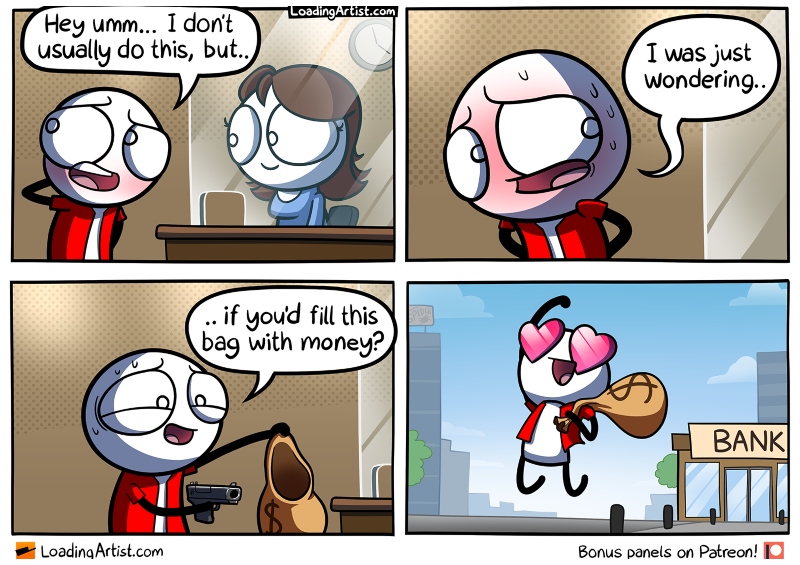
In particular, Jason thinks that the style has got a lot of depth to it, shading, perception and perspective. He remarks the comic is done by someone who knows how to draw. He compares it to The Oatmeal, Cyanide and Happiness and the Perry Bible Fellowship and says that Loading Artist is like a mix of these three.
Story Arc
Jason also remarks that he particularly liked the story arc of the breakup, because it was based on the real life story of the author. The main character’s girlfriend, Jes, breaks up with him and leaves. Gregor did a short series of this story arc and Jason believes you can really see how Gregor is dealing with the breakup through his art.

The character of Jess was a regular one until that point, which makes it more painful when she leaves to never appear again. Jason enjoyed this comic journal aspect of it.
Juxtaposition of styles
The team discusses the juxtaposition of the simplicity of the characters (like Cyanide and happiness) and the painted backgrounds (like Bolt City/Copper). They also mention that these are the most detailed stick figures they have ever seen, since they appear to be people because of how expressive they are.
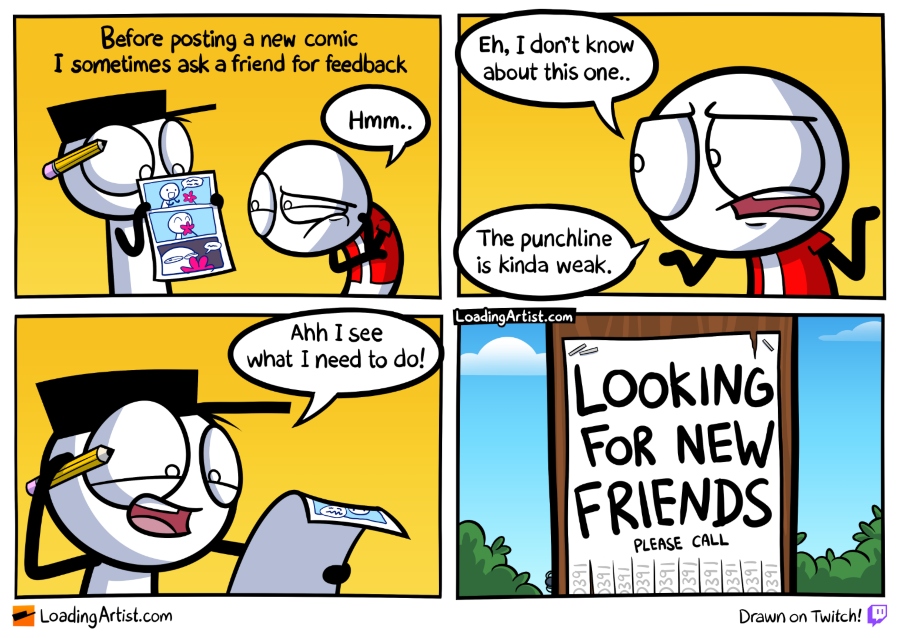
They agree that with this comic, you will never know what you are going to get, but you are going to feel an emotion, which makes it quite unique.
The length of a comic
One of the things that sets this webcomic apart from others is its strip length. Jason likes the idea that you never know how long the comic is going to be. It can go very long or it can be done in only three panels.
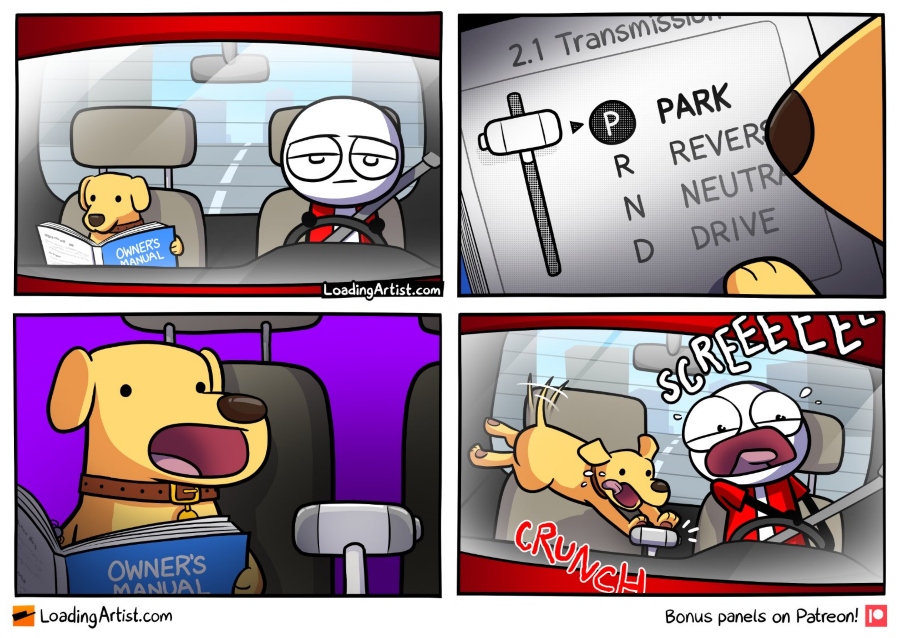
The fact that it can take up to 8 frames allows it more story and character development. In fiction writing, character development is the process of building a unique, three-dimensional character with depth, personality, and clear motivations.
He started out poorly
That is what others on the team think. Gregor’s first webcomics were not as good as the ones he does now. In the beginning, it was a bit stiff and flat, but it was when the author started to add his emotions into it that the comic took off.
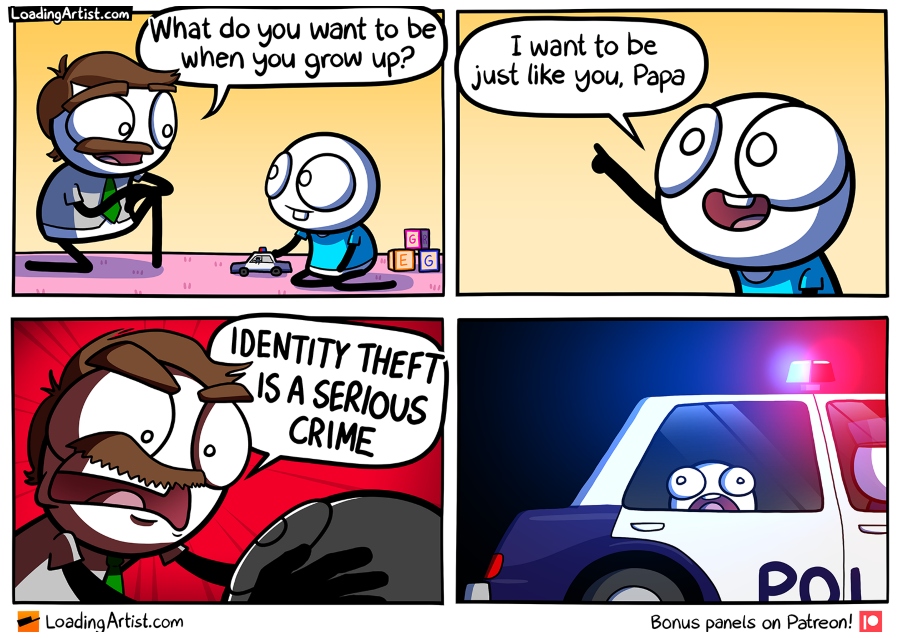
The podcast team recommends this webcomic, but what they don’t like is the commercial presentation. They state it is “too needy” because it’s constantly reminding you to subscribe, donate and become a Patreon.
Self-deprecating perspective
Irony and sarcasm play a prominent role in the comedy of the “Loading Artist” webcomic. Through these techniques, creator Gregor Czaykowski presents a unique and often self-deprecating perspective on the world around him, poking fun at everything from the banalities of everyday life to the complexities of the creative process.

In its most basic form, irony uses words to convey the opposite of their literal meaning. On the other hand, sarcasm is a form of irony intended to mock or ridicule.
Contrasting worldview
Both irony and sarcasm are powerful tools for a comedian. They allow the humorist to present a contrasting worldview, highlighting its absurdities and shortcomings.

In the case of “Loading Artist,” Czaykowski uses irony and sarcasm to significant effect, often taking on the role of the everyman, bemoaning the frustrations and irritations of daily life with a wry and self-deprecating sense of humor.
Exploring personal topics
Whether he is poking fun at the mundane aspects of existence, such as the drudgery of work or the frustrations of dealing with technology, or exploring more personal topics, such as the struggles of being an artist or the complexities of relationships, Czaykowski’s use of irony and sarcasm serves to both entertain and enlighten.
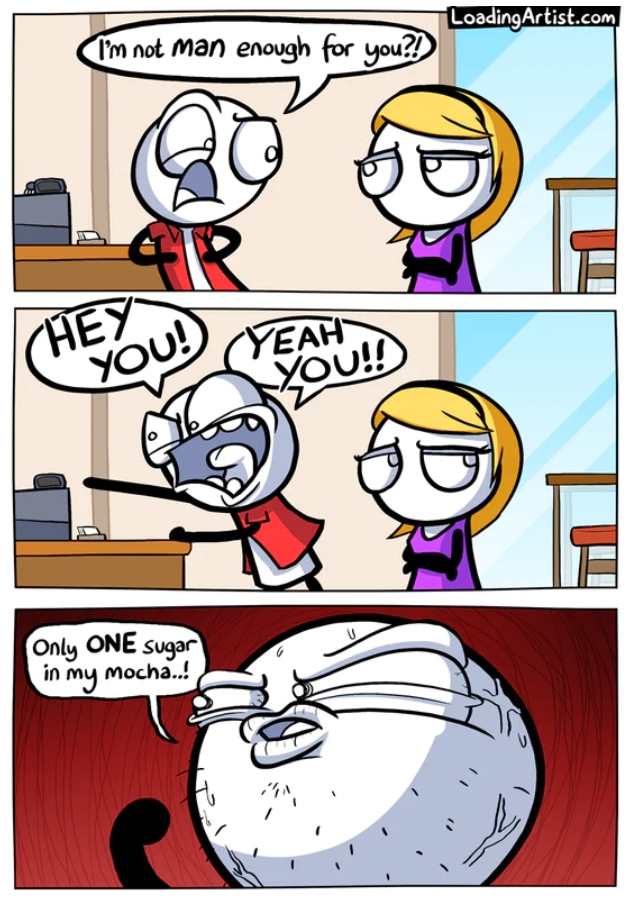
One of the key ways Czaykowski uses irony and sarcasm in “Loading Artist” is through the use of meta-humor. This is a form of self-referential comedy, often making fun of the medium’s conventions.
Meta-humor
In “Loading Artist,” Czaykowski often takes on the artist’s role, poking fun at the creative process and the various challenges that come with it. For example, in one comic, he depicts himself struggling to come up with an idea for a new strip, only to find that the solution is to simply draw a blank panel and call it “art.”
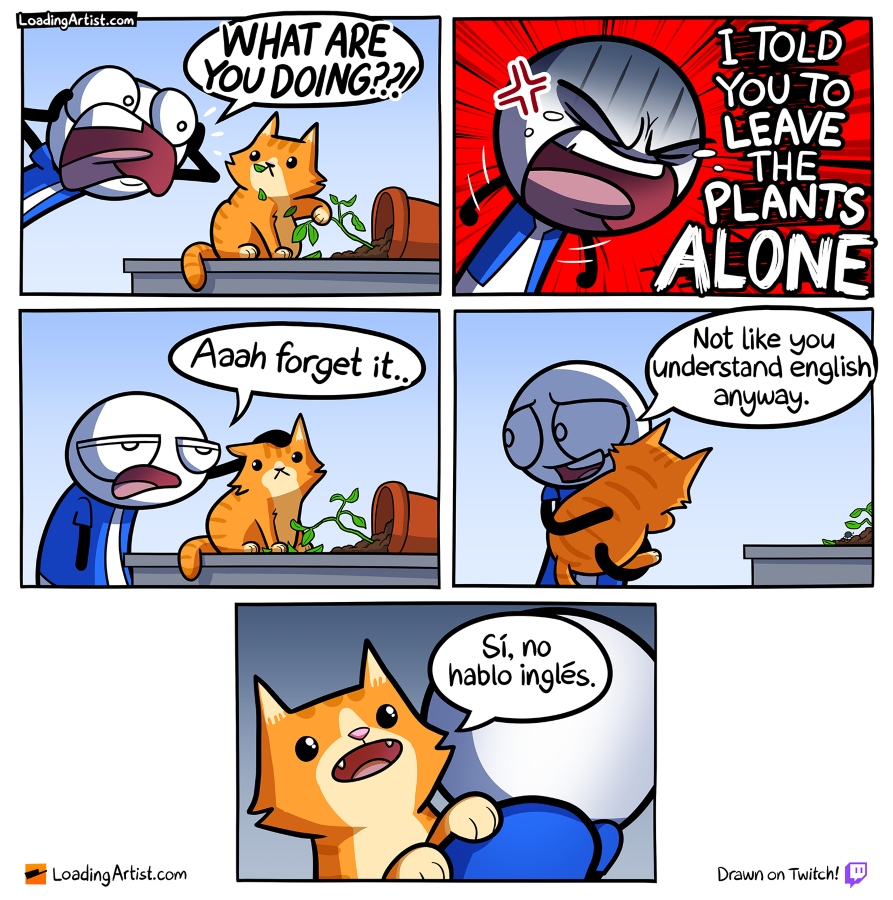
Through this type of meta-humor, Czaykowski can offer a humorous take on the creative process while also commenting on the broader cultural context in which the comic exists.
Absurd obstacles
Another way in which Czaykowski uses irony and sarcasm in “Loading Artist” is through his use of self-deprecating humor. In many of his strips, he takes on the everyman’s role, highlighting daily life’s frustrations and difficulties with a tongue-in-cheek sense of humor.
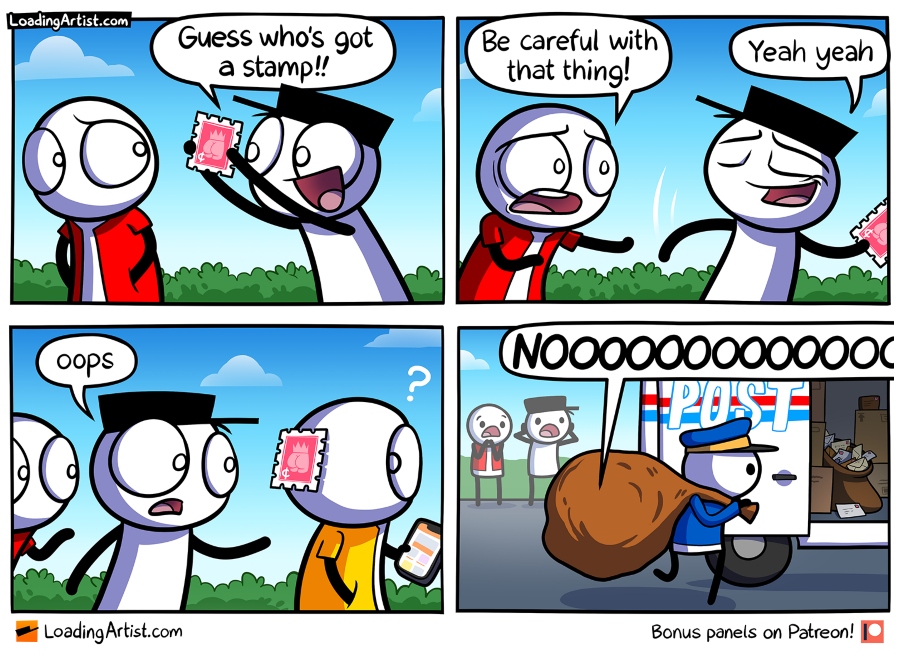
For example, in one comic, he depicts himself struggling to get out of bed in the morning, only to be confronted with a series of increasingly absurd obstacles, such as a cat that refuses to move and a dog that won’t stop barking.
Cultural context
Through this type of humor, Czaykowski can offer a humorous take on everyday life’s difficulties while commenting on the broader cultural context in which the comic exists.
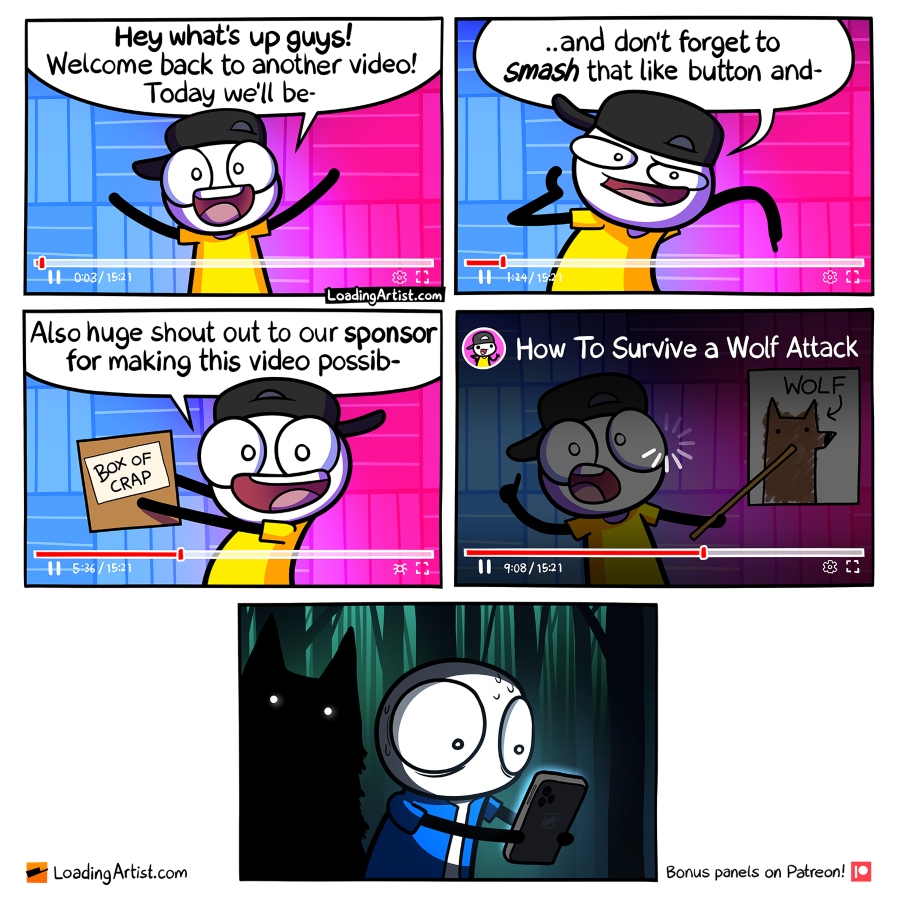
Irony and sarcasm also play a prominent role in “Loading Artist’s” representation of the internet and technology. In many of his strips, Czaykowski takes on the role of the bemused observer, poking fun at the absurdities and frustrations of our relationship with technology.
Technology challenges
For example, in one comic, he depicts himself trying to navigate the complexities of a new software program, only to find that the solution is to simply give up and go outside.

Through this type of humor, Czaykowski can offer a humorous take on technology challenges while commenting on the broader cultural context in which the comic exists.